

















White House Announces New Grand State Ballroom Designed by McCrery Architects
In a notable extension of one of the world’s most prestigious architectural landmarks, the White House has announced a new permanent event space: a State Ballroom by McCrery Architects. The ballroom will build on the organization’s effort to alleviate the limits of spatial constraints of existing ceremonial spaces. It is one of the largest expansions in the history of the presidential complex.
McCrery Architects, located in Washington D.C., is an architect firm devoted to classical architecture and design, is the lead designer for the project. The ballroom will be a natural extension of the the White House’s neoclassical legacy, followed by Clark Construction for the build and AECOM, an engineering consultant to help design the build. The construction target schedule is September 2025, with expected completion in the current U.S. administration.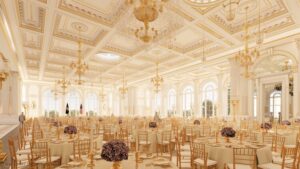
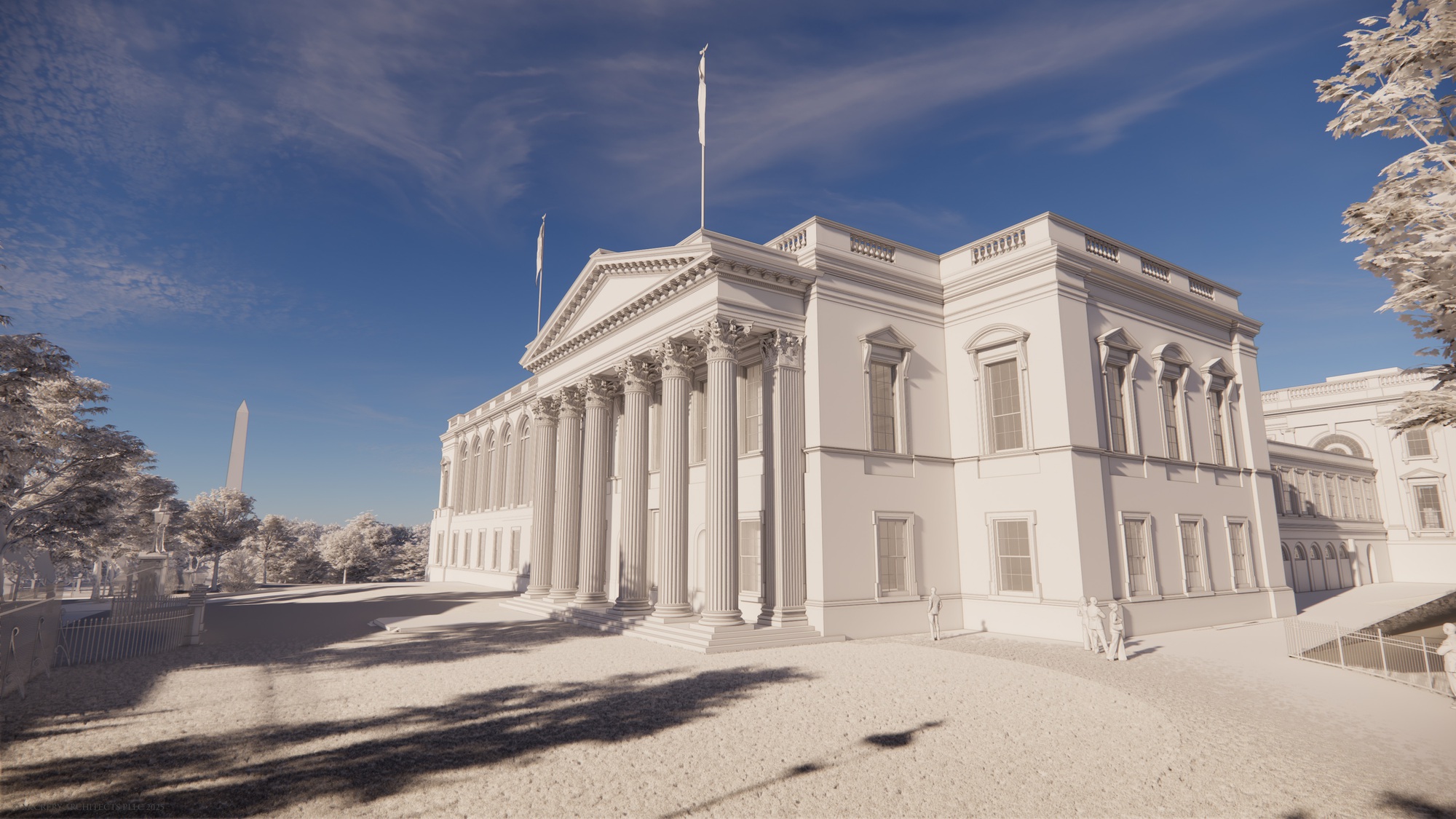
Currently, the East Room serves as the principal venue for large functions but is limited to just 200 guests. The new State Ballroom will significantly increase capacity, offering 90,000 square feet of enclosed space and seating for up to 650 people. The new building will take the place of the East Wing (built in 1902, and changed in the centuries before the Second World War), and will exhibit the same formal and historic character as the Main White House building which it will be constructed alongside.
These early renderings show a neoclassical interior with coffered ceilings, Corinthian columns, and gilded ornamental details; even the ballroom at the upper level has three façades of arched windows to bathe the room in natural light while retaining a formal appearance. There are also suspended chandeliers, and a grand portico at the east elevation which add to the classical style.
James McCrery, founding principal of McCrery Architects, highlighted the project’s importance as the most substantial architectural update to the White House since the Truman-era renovations. “This addition is not only about increasing space—it’s about reinforcing the architectural language of dignity, permanence, and tradition,” he remarked.
Despite its modern function, the ballroom will remain faithful to the historic White House identity, blending seamlessly with its surroundings while addressing the evolving functional requirements of state protocol and diplomacy.
#WhiteHouse#StateBallroom#ClassicalArchitecture#BuildingHistory#printpublication
#modernarchitectindia#modernarchitecttimes