


















Five architecture industry trends for 2022
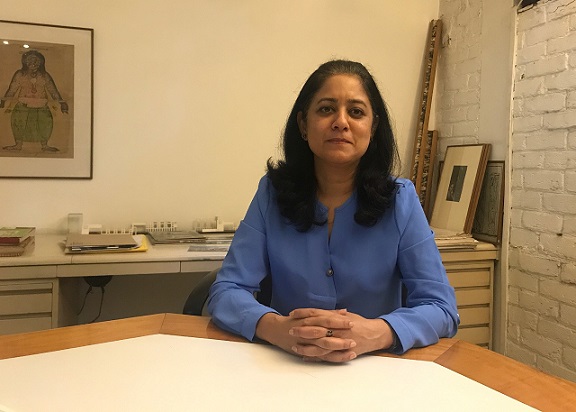
An article by Shabnam Dhar partner at Studio Archohm
In the shape of Metaverse and AI, the complete postulation of a virtual community playing an uttermost part in our lives evolved this year (Artificial Intelligence). A shift towards having customized and lavish residences, located in desirable and open locations, has raised the demand for high-quality homes. Various features such as business centers, convenience stores, home theaters, and medical facilities are a necessity today. Space is the real luxury.
Here are five architectural trends to watch for this year, all of which will be explored and iterated in 2022.
Metaverse: A virtual community
In the tech Scene metaverse is the hottest buzzword. From the real economy to the digital economy the whole world is witnessing a major shift, and the integration of real and digital economy has been accelerated dramatically since the pandemic. In the metaverse, architects play a key role in the realization of innovative designs. Metaverse is a vision of interconnected, real-time, and enduring virtual communities of individuals teleporting across digital realities. In this new realm for architecture would be the capacity it gives to people of all ages to make a name in the architecture industry.
Smart and home automation and 3D printing
Home automation is the newest trend in the architecture industry that allows you to control almost every aspect of your home through the (IoT) Internet of Things. Because you can use it for home security, smartphone apps that automate door locks, managing appliances, monitoring energy use, as a personal assistant, caring for the elderly or disabled, and more just about anywhere in the country, the potential of home automation continues to rise. Nowadays a smart building provides additional convenience to its occupants while also lowering utility costs. The requirement to produce and consume ethically and responsibly shows a social understanding of sustainability in domotic architecture.
In addition to being employed for elaborate construction and technology 3D printing has been rigorously tested in the housing industry as well. In reality, several 3-D printing residential constructions have been created this year, while using a variety of materials. With these beneficial implementations in mind, digital visualization of every component, via software such as BIM has been critical in progressing the printing process. It is feasible to see how elements and features of design integrate. This results in a smarter, more innovative design – by precisely modeling construction systems, with all of their dimensions and layers. A tool not available till recently.
Multifunctional spaces
There has been a need to improve the efficiency of spaces making them multi-purpose because from work to play surprisingly our homes have become the hub for just about everything these days after Covid. For architects, WFH (working from home) has meant determining how each nook is used and how they may improve overall functioning and ergonomics rather than starting from scratch. Architects are finding more ways to guarantee multi-purpose efficiency while also preserving noticeable desire for more balanced setups in the home.
Go ‘wow’ with minimalism
The old age, less is more, is more relevant today than before. Covid lockdowns have taught us all how to make do with minimal possessions, needs and demands. This learning has trickled down to all aspects of our lives – architecture included. More and more clients are demanding minimalism in design. Simplicity in design and approach is the new client brief. Focus on pure forms that reflect the design essence has replaced ornamentation and decoration. Minimalism is also making a resurgence in terms of the materials used to construct. Now that we are rethinking our lifestyles, this tendency to use quality materials will result in economic savings and a better grip on budget constraints.
Go Green
Because sustainability is a growing concern for the business, it has taken significant steps to address it, including a continual drive for environmentally responsible design and construction. The tendency to us quality materials that ensure thermal and acoustic insulation will go a long way in benefiting the environment. The Architecture, Engineering and Construction (AEC) industry is collaborating to invent and design new methods of limiting the negative impact of construction and therefore “saving the planet”. Designing buildings using natural resources and passive climate control strategies is almost a given norm today and will be taken to the next level in the coming years.
#modernarchitecttimes #modernarchitectindia #architect #news #article #government #building #rawmaterial #history #art #sculpture #home